
6 Ways to Guard Against Wire Fraud Scams When Buying or Selling a Home
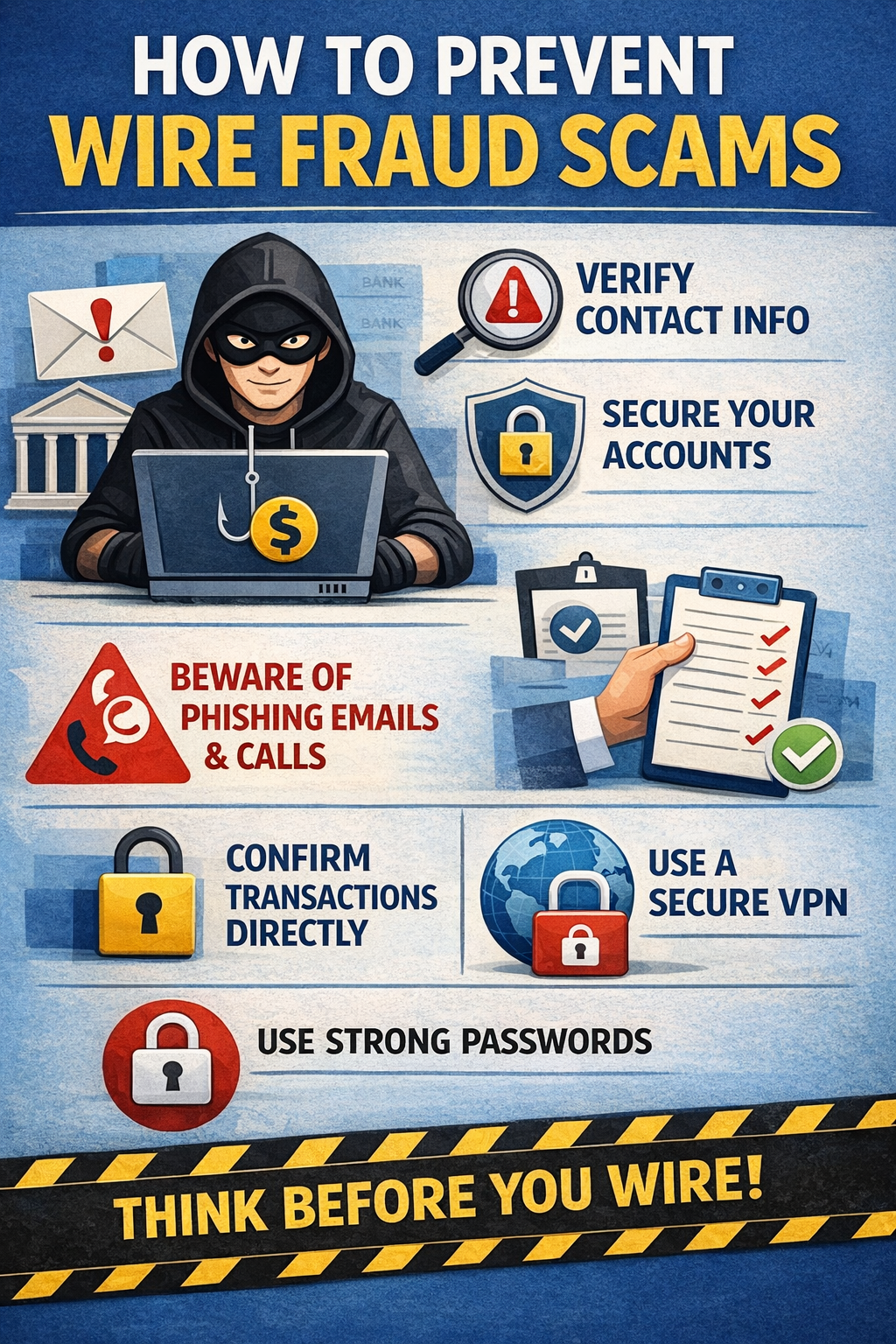
The convenience of today’s digital world has transformed the way we work, shop, and complete real estate transactions — but it’s also opened the door for online criminals. One of the fastest-growing threats in real estate today is wire fraud 🏠💻.
Whether you’re buying or selling a home, understanding how to spot and avoid wire fraud scams could save you from losing your hard-earned money.
What Is a Wire Fraud Scam? 🚨
Wire fraud scams — often called phishing schemes — happen when cybercriminals trick buyers or sellers into sending their closing funds to a fake account.
Here’s how it usually works:
👤 Scammers pose as a real estate agent, title company, or attorney.
📧 They send fake but “official-looking” emails, copying logos, names, and signatures almost perfectly.
💳 The email gives false wiring instructions, directing you to send large sums (like a down payment) straight to the scammer’s account.
Once that money is sent, it’s almost impossible to recover. That’s why education and prevention are your best defense.
6 Expert Tips to Protect Yourself from Wire Fraud 💥
Avoiding wire fraud requires attention, verification, and good communication. Cybersecurity professionals recommend these six key steps to protect yourself and your real estate investment:
-
Educate Yourself Early 🧠
Talk to your agent and lender about wire fraud before you ever send money. Understand that your agent will never personally send wiring instructions. Those details come directly — and securely — from your title company, lender, or attorney. -
Always Verify Before You Send Funds 📞
Before wiring money, always confirm the details are legitimate using one of these methods:-
Call your title company, attorney, or lender using a trusted phone number (not one from an email).
-
Look up their phone number on their official website, not in the message you received.
-
Visit the office in person if possible before transferring any funds.
-
-
Confirm Who Is Handling Your Money 🏦
Verify the identity of anyone involved in the wire transfer, including your bank representative. Call your bank and ask for written confirmation of any transfer request before proceeding. -
Avoid Using Public Wi-Fi 🌐🚫
Don’t log into banking or email accounts from coffee shops, airports, or public Wi-Fi connections. These networks lack encryption and are prime hunting grounds for hackers. -
Set Rules for Fund Transfers ✍️
Tell your financial institution not to allow changes to wiring instructions without your written consent. Be cautious of last-minute calls, texts, or emails suggesting updated details — they’re often scammers in disguise. -
Report Anything Suspicious Immediately 🚔
If you receive an email, text, or call that feels “off,” stop immediately. Contact:-
Your financial institution or lender at the verified number from earlier communications.
-
Your real estate agent — and never use the contact info from the suspicious message.
-
The Bottom Line 💬
Buying or selling a home is one of the biggest financial moments of your life — and scammers know that. Protect yourself by staying alert, double-checking every detail, and working only with verified professionals.
If you ever feel uncertain about your transaction or receive an unexpected email about wiring funds, reach out right away.
For trusted local guidance, and to ensure your real estate transaction stays safe, secure, and successful, call Krista Klause, your trusted realtor serving San Antonio, Bandera, Helotes, and surrounding areas. 🏡📞✨
Your dream home should start with confidence — and end without scams!
Categories
Recent Posts